
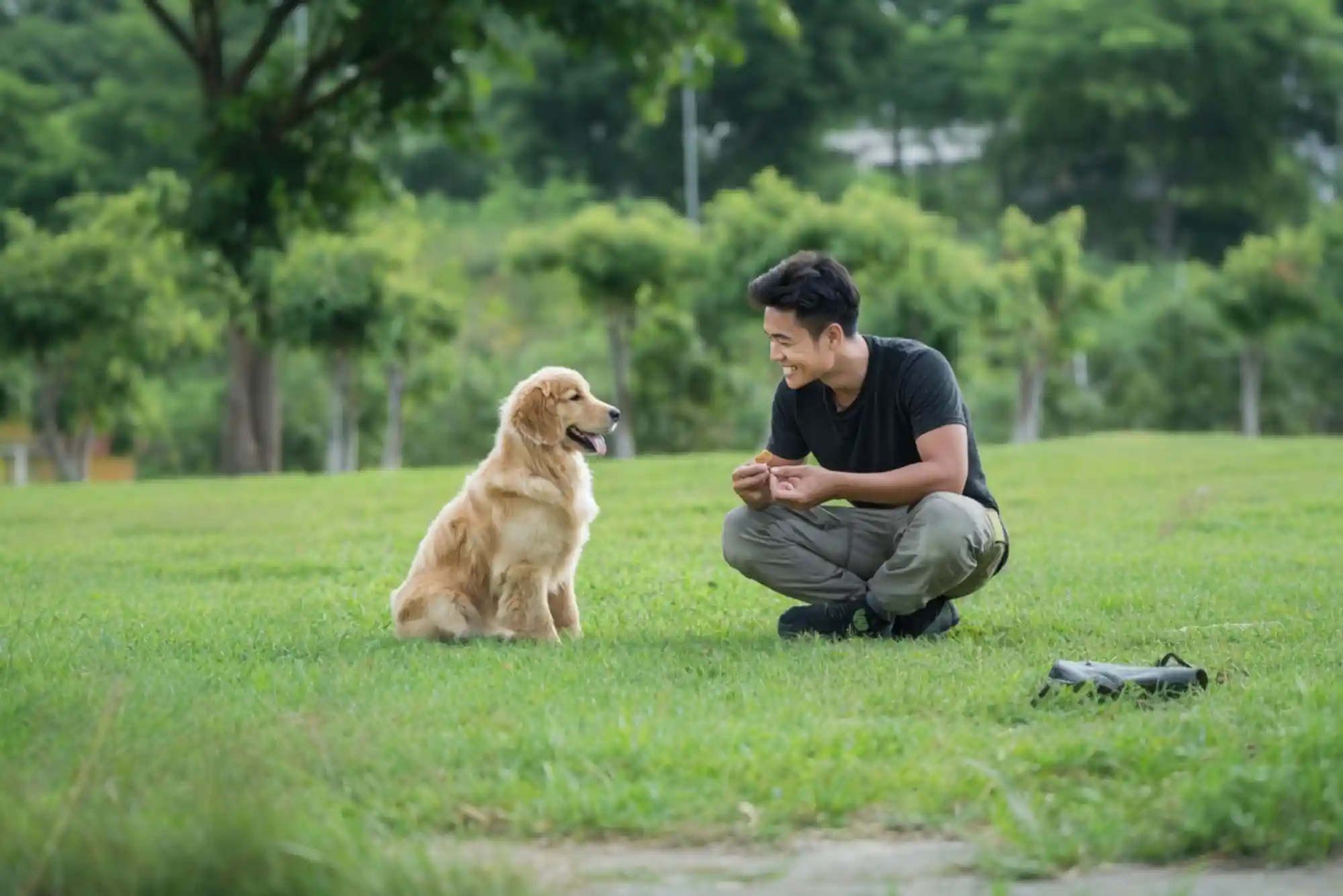
Introudction
An emergency recall can be one of the most valuable behaviors you ever teach your dog. Imagine your dog slips through an open gate, escapes from a leash, or suddenly heads toward a busy road. In those moments, you need more than a dog that sometimes responds to “come.” You need a well-conditioned response that tells your dog to stop what they are doing and get back to you quickly.
The important point is that an emergency recall should not be treated like an ordinary obedience command. It needs its own cue, its own training history, and exceptionally strong reinforcement. Trainers commonly recommend building recall gradually, beginning in quiet environments and increasing distance and distractions only when the dog is succeeding consistently.
No recall is completely foolproof, and an emergency recall should never replace secure fencing, appropriate leashes, supervision, or other safety measures. However, careful training can give you an additional safety tool when seconds matter.
What Is an Emergency Recall?
An emergency recall is a special signal that tells your dog to immediately return to you, regardless of what they are doing.
It is different from an everyday “come” command. You might use your normal recall several times during a walk or around the house. The emergency recall, however, should be protected and used sparingly.
Think of it as a fire alarm. You do not activate a fire alarm every time you want someone to leave a room. Because it is reserved for serious situations, the signal remains meaningful.

A good emergency recall creates a predictable pattern: the dog hears the special cue, turns toward you, runs back, and receives an unusually valuable reward.
This approach is supported by modern recall-training guidance, which emphasizes creating a powerful positive association between the cue and returning to the handler.
Why Emergency Recall Matters
Dogs are naturally influenced by their surroundings. A rabbit running through the yard, another dog appearing on a trail, an interesting scent, or an unexpected noise can temporarily become more important than anything their owner is saying.
That is why recall should be trained before you actually need it.
A dog that reliably comes inside the house may still ignore the same cue outdoors. This does not necessarily mean the dog is stubborn. It often means the behavior has not been generalized to environments with stronger distractions.
Emergency recall training gives you a separate behavior to develop specifically for high-stakes situations.
It can potentially help if your dog gets through an open door, slips a collar, escapes from a yard, or moves toward a dangerous area. Reliable recall is widely considered an important safety behavior for exactly these situations.
Choose a Special Emergency Recall Cue
The first step is choosing a cue that your dog does not already associate with everyday activities.
You might use a unique word such as “Here Now,” “Quick,” or another short phrase. A whistle can also work if you can produce it consistently.
The exact word is less important than its history.
Once you choose your cue, protect it. Do not use it casually to call your dog inside for dinner, end a game, give a bath, or bring the dog home from an enjoyable outing.
If the cue becomes associated with ordinary or unpleasant events, its value can gradually decrease.
Your regular “come” command can remain your everyday recall. The emergency cue should be something special.
Build the Emergency Recall Association
Before expecting your dog to run toward you from a distraction, teach them what the emergency cue means.
Start inside your home, where your dog is comfortable and distractions are minimal.
Say the emergency cue once in a cheerful voice. Immediately provide an exceptionally valuable reward. The dog does not need to perform a complicated behavior at this stage. You are creating an association between the sound and something wonderful.
For a food-motivated dog, that reward might be small pieces of cooked chicken, cheese, or another safe, high-value food. For another dog, a favorite toy or exciting game may be more motivating.
The principle is simple: the emergency cue predicts something extraordinary.
Repeat this exercise during short sessions rather than turning it into a long drilling session. Over time, your dog should become visibly excited when they hear the special signal.
Teach the Dog to Run All the Way Back
Once your dog understands that the emergency cue predicts a fantastic reward, you can begin asking for movement toward you.
Stand only a short distance away. Give the cue once and move backward or make yourself inviting. When your dog turns and comes toward you, encourage them enthusiastically.
As soon as the dog reaches you, provide the jackpot reward.
The goal is not merely for your dog to look at you. You want the entire behavior: disengage from the environment, turn toward you, run to you, and remain close enough for you to safely take hold of the collar if necessary.
This final part matters. A dog that runs close but immediately darts away can still be difficult to secure during a genuine emergency.
Some recall-training methods therefore incorporate gentle collar touching or handling into the finished behavior.
Use a Jackpot Reward for Emergency Recall
An emergency recall should pay better than an ordinary behavior.
That does not mean you need to feed your dog an enormous amount of food every day. It means the emergency cue should have a history of producing an unusually generous reward.
For example, instead of giving one small treat, you might give several pieces one after another while enthusiastically praising your dog.
The reward should be something your individual dog genuinely values.
A common mistake is choosing a reward based on what the owner thinks is convenient rather than what motivates the dog. If dry kibble barely interests your dog, it may not compete effectively with a squirrel, rabbit, unfamiliar dog, or exciting outdoor scent.
Reward-based recall guidance consistently emphasizes making the payoff valuable enough to compete with environmental distractions.
Practice Emergency Recall in Easy Places First
Do not begin emergency recall training at a busy dog park.
Start somewhere boring and predictable. Your living room, hallway, fenced yard, or another controlled space is much more appropriate.
Once your dog responds consistently, gradually increase the challenge.
Move from a quiet room to another part of the house. Then try a secure yard. Later, practice outdoors using a suitable long line in a safe environment.
A long line gives your dog freedom to move while providing an additional layer of physical control. It also prevents repeated failures in which the dog learns that the recall cue can simply be ignored.
The progression should be gradual. If your dog performs beautifully in the house but ignores the cue outside, the answer is not necessarily to shout louder. Instead, reduce the difficulty and rebuild the behavior.
Increase Distractions Slowly
Reliable recall is built through proofing.
Once your dog succeeds in a quiet environment, introduce mild distractions. Your dog might be sniffing nearby, looking at a toy, or exploring a familiar area.
Eventually, you can work around more challenging distractions, but only when your dog has demonstrated success at easier levels.
This is where many owners accidentally move too quickly. A dog that responds perfectly in the kitchen has not automatically learned to recall away from squirrels in a park.
Every new environment is another training opportunity.
Keep your dog on an appropriate leash or long line until you have strong evidence that the behavior is reliable in that particular setting. Never use an off-leash environment as a test of whether recall training is working.
Never Repeat the Emergency Cue Again and Again
One of the fastest ways to weaken a recall cue is repetition.
If you say the emergency word repeatedly while your dog continues sniffing the ground, you are giving the dog an opportunity to learn that the signal does not require an immediate response.
During training, give the cue once.
If the dog does not respond, do not turn the exercise into a shouting match. Instead, manage the situation safely and return to an easier training level later.
The same principle applies to ordinary recall. Trainers frequently identify repeated commands as a major reason dogs learn to wait until the owner has said something several times before responding.
Never Punish Your Dog for Coming Back
This rule is extremely important.
Suppose your dog escapes the yard and eventually comes running back. You are understandably frightened and angry. However, punishing the dog after they return can create a dangerous association.
Your dog may learn that coming back to you results in anger.
Instead, secure your dog calmly, deal with the immediate safety problem, and analyze what allowed the escape to happen.
Even if the dog took several minutes to respond, returning should remain emotionally safe and rewarding. Positive recall training specifically emphasizes avoiding punishment after the dog comes back.
Do Not Use Emergency Recall to End Every Good Thing
Your emergency cue should not become a secret signal for “fun is over.”
If you repeatedly use it to put your dog back in the car, end playtime, go home, or start an unpleasant activity, your dog can learn that responding means losing something enjoyable.
This is why emergency recall needs careful management.
During training, keep the cue valuable. Give the exceptional reward, praise your dog, and then, when appropriate and safe, allow the dog to return to normal activity.
This teaches an important lesson: coming back to you does not always mean freedom disappears.
Practice Regularly Without Overdoing It
Recall is not a skill you teach once and permanently check off your list.
Short, successful practice sessions are more useful than exhausting your dog with repetitive drills.
You can occasionally practice inside the house, in the yard, or during controlled outdoor activities. Keep the emergency cue rare enough that it retains its special meaning.
As your dog becomes more reliable, continue reinforcing the behavior. You can gradually vary the rewards while maintaining occasional high-value jackpots.
Think of emergency recall as a lifelong behavior rather than a one-week project.
Common Emergency Recall Mistakes
One of the biggest mistakes is using the emergency cue before the dog is trained to understand it. A special word cannot magically override instinct, fear, prey drive, or overwhelming environmental stimulation.
Another mistake is expecting too much too soon. Owners sometimes go directly from successful indoor training to an off-leash park. That creates a massive jump in difficulty.
Using weak rewards can also undermine progress. Your dog needs a reason to choose you when the environment is competing for their attention.
Finally, avoid using the emergency cue for ordinary situations. Once the cue becomes just another version of “come,” its special value can disappear.
How Long Does Emergency Recall Training Take?
There is no universal timeline.
Some dogs develop a strong response quickly, while others need many weeks or months of careful practice. Age, temperament, previous training, motivation, environment, and distractions all influence progress.
The more important question is not “How many days will this take?” but “Can my dog consistently respond at this level of difficulty?”
Only increase distance or distractions when your dog is succeeding reliably.
And remember that even a well-trained dog can make an unexpected choice. Emergency recall is an important safety behavior, not a guarantee of perfect control.
When to Get Professional Help
If your dog panics outdoors, shows severe fear, becomes highly reactive, chases wildlife compulsively, or repeatedly ignores recall despite careful training, professional assistance can be valuable.
A qualified reward-based trainer can observe the dog and handler together and identify problems that may not be obvious from written instructions.
If there is a sudden change in your dog’s behavior, particularly if a previously reliable dog suddenly stops responding normally, discussing the change with a veterinarian is also sensible. Behavior can sometimes be affected by underlying medical issues.
Make Emergency Recall Worth Coming Back For
Teaching an emergency recall is about creating a powerful habit before you ever face an emergency.
Choose a unique cue. Build a strong positive association. Reward generously. Start in easy environments and gradually introduce distance and distractions. Use a long line when appropriate, avoid repeating the cue, and never punish your dog for returning.
Most importantly, make coming back to you one of the best decisions your dog can make.
Start with just a few calm repetitions today. Build the behavior patiently, reinforce it throughout your dog’s life, and use normal safety measures alongside training. A carefully developed emergency recall could become one of the most important skills your dog ever learns.
FAQs
How do I teach my dog to come when called?
Begin in a quiet environment with your dog only a short distance away. Use one consistent recall cue, encourage your dog toward you, and immediately reward the successful return. Gradually increase distance and distractions as your dog becomes reliable.
What is the best command for a dog recall?
There is no universally best word. “Come,” “here,” or another short cue can work when consistently trained. For emergency recall, however, it is useful to choose a unique signal that is not routinely used in everyday conversation.
How do I teach my dog to come when called every time?
You cannot guarantee that a dog will respond perfectly in every possible situation, but you can greatly improve reliability through gradual training. Start with easy repetitions, use valuable rewards, prevent repeated failures with a long line when appropriate, and gradually introduce distractions.
Why does my dog come when called at home but not outside?
Outdoor environments contain much stronger distractions. Your dog may understand the recall cue but have insufficient training around those distractions. Move gradually from quiet areas to increasingly challenging environments rather than expecting an indoor behavior to automatically transfer outdoors.
What should I do if my dog ignores the recall command?
Do not repeatedly shout the command. If your dog is safely attached to a long line, calmly manage the situation and return to an easier level of training. Repeatedly calling a dog that is unable to respond can weaken the cue over time.
What is an emergency recall?
An emergency recall is a specially trained signal reserved for situations where you need your dog to return immediately. Unlike an everyday recall, it should be used rarely and reinforced with exceptionally valuable rewards. It should complement, not replace, normal safety precautions.