Introduction
Introducing two adult dogs can feel stressful, especially when both dogs have strong personalities. However, the first meeting does not need to become a confrontation. With thoughtful preparation, suitable space, and controlled interactions, you can create a calmer introduction.
Learning how to introduce two adult dogs on neutral territory without fighting starts with understanding canine body language. Dogs communicate through posture, movement, facial expressions, scent, and distance. Therefore, owners should watch these signals instead of forcing immediate contact.
A neutral location can reduce territorial pressure. Neither dog should feel that another animal is invading its home. The goal is not instant friendship. Instead, the first meeting should create a positive and manageable experience.
Why Neutral Territory Matters
Dogs can become protective of familiar spaces. A home, yard, or favorite walking area may feel like personal territory. Introducing another adult dog there can increase tension.
Neutral territory gives both dogs an unfamiliar environment. Consequently, neither dog has the same reason to defend its usual space.
A quiet sidewalk, open field, or spacious park can work well. However, avoid crowded dog parks during the first meeting. Too many dogs can create excitement and unpredictable interactions.

When considering how to introduce two adult dogs on neutral territory without fighting, choose a location with enough room to move apart. Space gives dogs an important opportunity to regulate their emotions.
Prepare Both Dogs Before the Meeting
Preparation begins before the dogs see each other. Each dog should have a secure, comfortable harness or flat collar. Use sturdy leashes that allow controlled movement without creating unnecessary tension.
Avoid retractable leashes during the introduction. They can make distance difficult to manage and may become tangled.
It also helps to bring high-value treats. Small treats can reward calm behavior and help create positive associations.
However, do not use food between dogs if either dog guards resources. In that situation, rewards should be delivered separately.
Owners should also understand each dog’s normal behavior. Knowing how a dog behaves when relaxed makes unusual body language easier to recognize.
Start With Distance
One of the most important principles is avoiding an immediate face-to-face meeting.
Begin with the dogs far enough apart that both can remain relatively calm. Two handlers should walk the dogs in the same general direction.
This parallel walking approach allows the dogs to notice each other without creating direct social pressure.
Initially, one dog may stare at the other. That does not automatically mean aggression. However, prolonged staring combined with a stiff body can indicate increasing tension.
If either dog becomes highly aroused, increase the distance. Waiting for calmness is more useful than forcing progress.
Watch Their Body Language Carefully
Understanding body language is essential when learning how to introduce two adult dogs on neutral territory without fighting.
A relaxed dog may have loose muscles and natural movement. Its mouth may remain relaxed, and its movements may appear flexible.
By contrast, a dog experiencing significant tension may become stiff or freeze. Other warning signs can include intense staring, raised hackles, growling, lunging, or repeated attempts to move directly toward the other dog.
Do not punish a warning signal such as growling. Growling provides valuable information about discomfort.
Instead, calmly create more distance. A warning that is respected can help prevent a more serious escalation.
Continue the Parallel Walk
Once both dogs appear comfortable at the initial distance, gradually reduce the space between them.
Do this slowly rather than moving directly toward each other. The dogs should continue walking in the same direction.
Walking reduces the intensity of direct staring. It also gives the dogs something natural to focus on.
Reward calm behavior when appropriate. For example, quietly praise a dog for looking at the other dog and then returning its attention to the handler.
The pace should depend on the dogs. Some may become comfortable within minutes. Others may require several sessions.
There is no benefit in rushing.
Allow Brief Natural Investigation
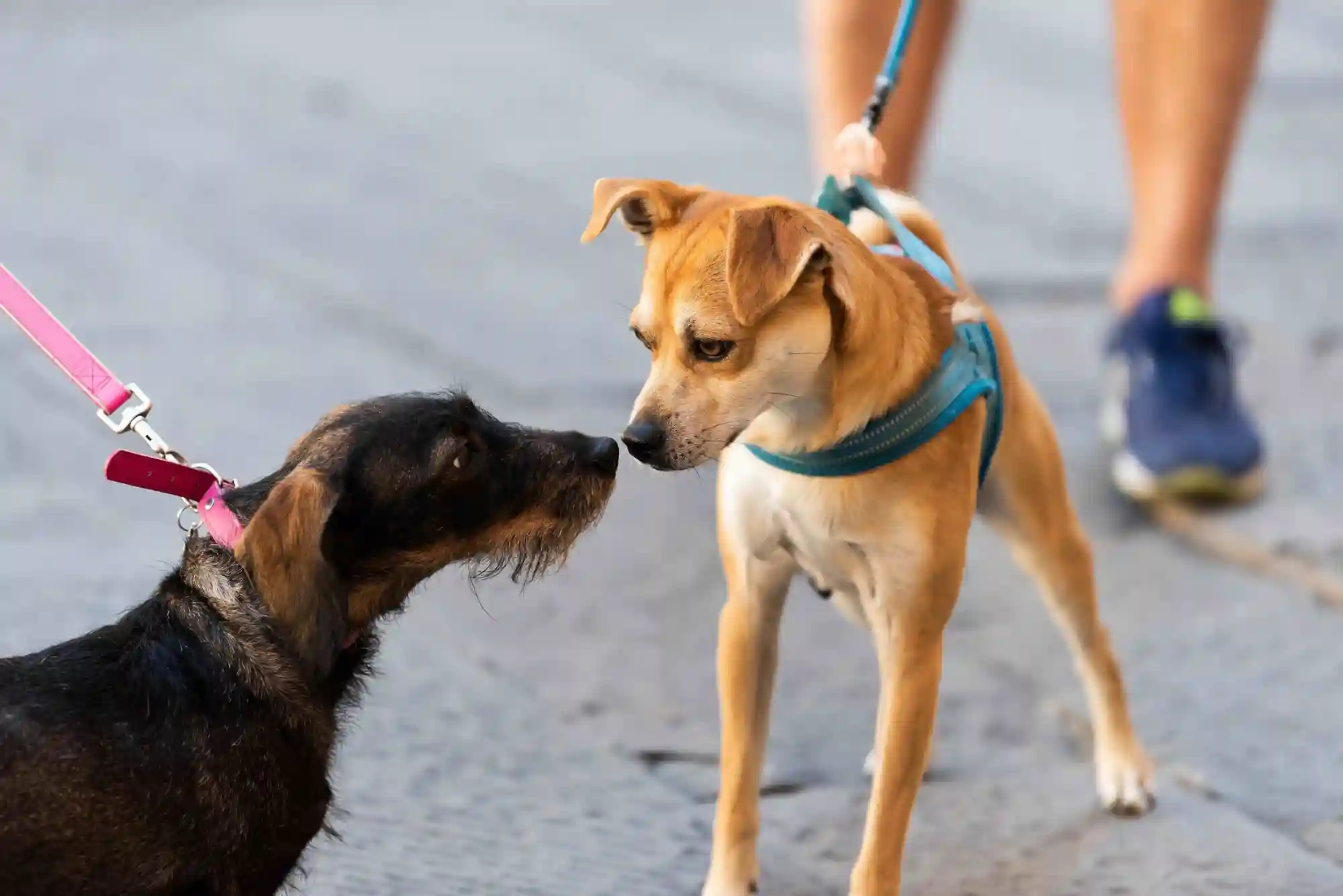
When both dogs show relaxed body language, allow a short period of closer investigation.
Many dogs prefer curved approaches rather than direct approaches. Therefore, avoid pulling the dogs into a straight nose-to-nose encounter.
Let the interaction remain brief. After a few seconds, calmly separate the dogs and continue walking.
This creates a useful pattern. The dogs can approach, investigate, and then move away without pressure.
If either dog becomes tense, increase distance immediately. A successful introduction is based on repeated calm experiences rather than prolonged contact.
Avoid Tight Leash Pressure
Leash tension can influence how dogs respond to each other.
When an owner constantly pulls backward, the dog may feel restricted. That restriction can increase frustration or anxiety.
Keep the leash controlled but reasonably loose whenever circumstances allow. Stand calmly and avoid sudden movements.
However, safety comes first. If a dog begins lunging or showing serious aggression, create distance immediately.
Do not attempt to physically place yourself between fighting dogs. A serious dog fight can cause severe injuries to people.
Keep the First Meeting Short
A common mistake is allowing the dogs to interact for too long.
Even dogs that initially behave well can become overwhelmed. Excitement and stress can accumulate during an unfamiliar meeting.
Short sessions allow the dogs to finish while things are still going well.
For some dogs, the first successful meeting may involve nothing more than walking together calmly. That is a positive outcome.
Friendship does not need to happen during the first encounter.
What If One Dog Growls?
A growl should be treated as communication rather than simple disobedience.
The dog may be saying that it feels uncomfortable, frightened, or overwhelmed. Punishing the growl can remove an important warning without addressing the underlying emotion.
Instead, increase distance and allow the dog to settle.
Then consider whether the meeting progressed too quickly. The next session should begin at a greater distance.
If growling repeatedly develops into lunging, snapping, or aggressive behavior, professional guidance is appropriate.
A qualified veterinary behaviorist or experienced reward-based behavior professional can help assess the situation.
What If the Dogs Fight?
Safety should always be the priority.
If the dogs become aggressive, separate them using safe methods and create substantial distance. Avoid grabbing collars with bare hands during an active fight.
After separation, allow both dogs time to recover. Do not immediately force another interaction.
A fight can change the emotional context of future meetings. Therefore, restarting the process more gradually may be necessary.
If either dog suffers an injury, seek veterinary care. Even small punctures can become infected.
Repeated fighting also deserves professional assessment. The underlying causes may include fear, resource guarding, previous experiences, poor social skills, or excessive arousal.
Introduce Them Again Gradually
A single meeting does not determine whether two dogs can live together successfully.
If the first session goes well, repeat controlled walks on different days. Keep the environment predictable and maintain enough space for both dogs.
Gradually allow more relaxed interaction as the dogs demonstrate consistent comfort.
Eventually, they may walk closer together or spend short periods in the same environment.
When introducing dogs that will share a home, additional steps are important. Their first home entry should also be carefully managed.
For example, remove valuable resources before bringing them together. Food bowls, toys, beds, and other possessions can create competition.
Common Mistakes to Avoid
Understanding how to introduce two adult dogs on neutral territory without fighting also means knowing what not to do.
Do not force the dogs to greet each other. Avoid holding them tightly while expecting them to “work it out.”
Do not punish barking, growling, or other warning signals. Instead, identify the distance at which each dog can remain calm.
Avoid crowded locations for the first meeting. Busy environments can make it harder to read body language.
Finally, do not assume that two friendly dogs will automatically become compatible housemates. Living together creates additional challenges involving food, resting areas, attention, and personal space.
When Professional Help Is Necessary
Some introductions should not be handled without expert assistance.
Professional help is particularly valuable when either dog has a history of serious aggression, repeated fights, severe fear, or resource guarding.
A professional can observe subtle body-language changes and design a controlled introduction plan.
Veterinary involvement can also be useful when sudden aggression appears. Pain and other medical problems can sometimes affect behavior.
The earlier you address serious concerns, the easier it may be to prevent repeated negative interactions.
How Long Should Dog Introductions Take?
There is no universal timeline for introducing adult dogs.
Some dogs become comfortable after one or two calm meetings. Others need several sessions over weeks.
The correct pace depends on temperament, previous experiences, social skills, environment, and arousal levels.
Progress should be measured by behavior rather than the calendar.
Calm walking, relaxed body language, voluntary disengagement, and appropriate responses to each other are useful signs of progress.
Frequently Asked Questions
How do you introduce two dogs when one is aggressive?
Begin with professional guidance when aggression is already established. Keep the dogs separated until a qualified behavior professional develops an appropriate plan.
Controlled distance, parallel walking, and gradual exposure may be useful. However, the specific approach should match the dogs’ behavior and safety risks.
How long does it take for two adult dogs to get along?
It can take days, weeks, or longer. Adult dogs differ significantly in temperament and previous experiences.
Avoid measuring success by how quickly they become playful. Calm coexistence is an important first goal.
Should you let dogs meet off leash?
Not during an initial introduction unless a qualified professional has determined that it is safe.
Leashes provide management and allow handlers to create distance. However, avoid keeping them excessively tight.
Should you let dogs fight it out?
No. Allowing dogs to fight can result in injuries and reinforce dangerous behavior.
Instead, prioritize prevention and controlled separation. Repeated conflicts require professional assessment.
How do I know if dogs are getting along?
Look for relaxed bodies, flexible movement, normal sniffing, voluntary disengagement, and the ability to remain calm near each other.
Do not rely on one behavior alone. Consider the entire body and situation.
Conclusion
Learning how to introduce two adult dogs on neutral territory without fighting requires patience, observation, and careful management. Neutral territory can reduce territorial pressure, while parallel walking allows both dogs to become comfortable gradually.