
Introduction
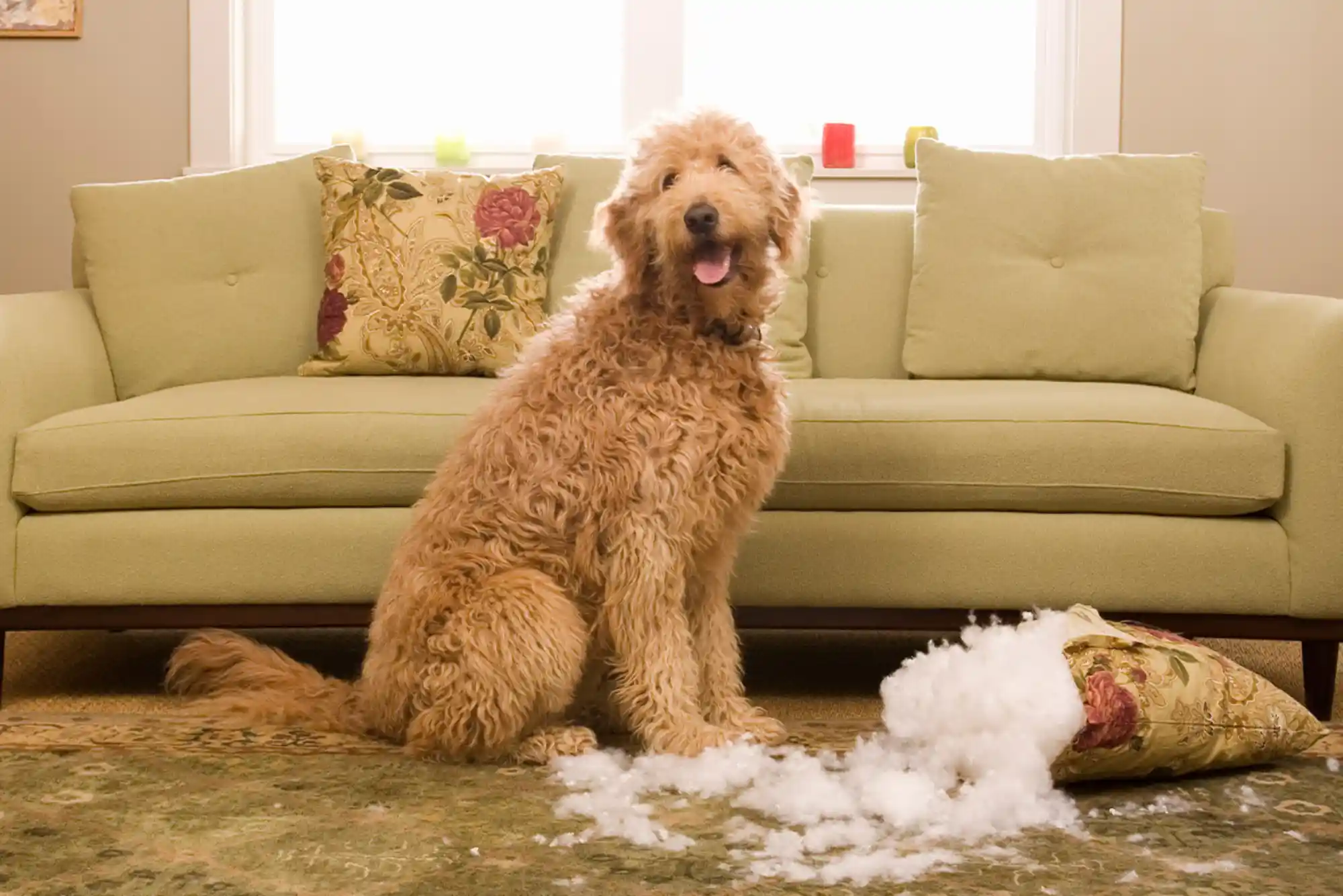
If your puppy bites everything in sight, you are not alone. Chewing is a normal part of puppy development. However, it can become frustrating when your furniture becomes a favorite target.
The Puppy Teething Timeline: What Week Do Puppies Stop Biting and Chewing Furniture? usually follows a predictable pattern. Most puppies begin losing their baby teeth around three to four months old. Their adult teeth typically finish developing by about six months.
Still, teething does not automatically end unwanted chewing. Puppies also chew because they are curious, bored, excited, or seeking attention. Therefore, training must continue alongside the physical teething process.
Understanding the puppy teething timeline makes this stage much easier to manage. It also helps you know what behavior is normal and when additional guidance may be needed.
Understanding the Puppy Teething Timeline
Puppies are born without visible teeth. Their first baby teeth usually begin appearing when they are around two to three weeks old.
By approximately eight weeks, most puppies have a full set of deciduous teeth. These small teeth help them transition from nursing to eating solid food.

The next major stage begins around three to four months. At this point, adult teeth start pushing through the gums. Baby teeth loosen and eventually fall out.
This process can make the gums sore. Consequently, puppies often chew more intensely during this period.
The Puppy Teething Timeline: What Week Do Puppies Stop Biting and Chewing Furniture? varies between individual dogs. However, many puppies have most adult teeth by six months of age.
Some chewing may continue after that point. The reason is important. Teething may be finished, but chewing remains a natural canine behavior.
When Do Puppies Stop Biting Because of Teething?
Many owners expect biting to disappear as soon as the adult teeth arrive. Unfortunately, it is rarely that simple.
Teething-related discomfort often decreases substantially around six months. However, puppies may still use their mouths during play and exploration.
A puppy may also have learned that biting gets an exciting response. Pulling your hand away can become part of the game.
Therefore, the puppy teething timeline should be viewed as a developmental guide rather than a guaranteed deadline.
Most puppies show noticeable improvement in mouthiness between four and six months. With consistent training, many become much gentler during this period.
By around six to eight months, destructive chewing should usually become easier to manage. Nevertheless, individual puppies mature at different speeds.
Why Puppies Chew Furniture
Teething is only one reason puppies chew furniture. Understanding the other causes can make training more successful.
Puppies investigate their surroundings with their mouths. A wooden chair leg can provide an interesting texture and smell.
Boredom can also trigger destructive chewing. A puppy without enough physical and mental activity may create its own entertainment.
Stress and anxiety can contribute as well. Some puppies chew when they are left alone or experiencing changes in their environment.
Attention can become another factor. If chewing furniture consistently causes a dramatic reaction, the puppy may learn that it produces interaction.
The solution is not simply stopping chewing. Instead, owners should provide appropriate alternatives and reinforce desirable behavior.
What Happens During Each Teething Stage?
Birth to 8 Weeks
During the first weeks, puppies gradually develop their baby teeth. Their early teeth are sharp and help them learn basic eating and chewing behaviors.
By eight weeks, most puppies have their deciduous teeth. Gentle mouthing is common at this age.
This is also an excellent time to begin teaching bite inhibition. Puppies can learn that human skin is not an appropriate chew toy.
8 to 12 Weeks
Puppies become increasingly curious during this period. They may explore furniture, shoes, carpets, and other household objects.
Their chewing behavior can become more noticeable. Redirecting them toward suitable toys is important.
Avoid turning every correction into a confrontation. Calmly interrupt the unwanted behavior and offer something appropriate to chew.
12 to 16 Weeks
This is often one of the most active teething periods. Adult teeth begin emerging while baby teeth loosen.
Gums can feel uncomfortable, encouraging puppies to chew more frequently. Cold, puppy-safe chew options may provide relief.
Owners should also puppy-proof rooms during this stage. Limiting access prevents repeated opportunities to practice destructive behavior.
4 to 6 Months
The transition toward adult teeth becomes more obvious. Many baby teeth have fallen out, while adult teeth continue emerging.
Chewing may remain intense, but it should gradually become easier to redirect. Consistent training becomes especially valuable now.
This is also a key period for reinforcing calm behavior. Reward your puppy when they choose their own toys instead of furniture.
6 Months and Beyond
By approximately six months, many puppies have their adult teeth. The physical teething stage is usually nearing completion.
However, chewing itself does not necessarily disappear. Dogs naturally enjoy chewing throughout life.
The goal is therefore not to eliminate chewing completely. Instead, teach your dog what is appropriate to chew.
How to Stop a Puppy From Chewing Furniture
Start by making inappropriate objects difficult to access. Use gates, pens, closed doors, or other safe management strategies.
Next, provide several suitable chewing options. Different textures can keep your puppy interested in appropriate items.
When your puppy chooses a toy, praise them calmly. You can also offer a small reward for desirable behavior.
If your puppy approaches furniture, redirect them before chewing begins. Offer an approved toy and encourage engagement with it.
Consistency matters more than punishment. Everyone in the household should follow the same rules.
Avoid chasing your puppy around the house after they grab an object. Chasing can accidentally turn chewing into an exciting game.
Instead, calmly exchange the inappropriate item for an acceptable toy. This teaches your puppy that giving up an object does not end their fun.
Helping a Puppy Through Teething Discomfort
Teething can make puppies restless and uncomfortable. Appropriate chew toys can help satisfy their natural urge to chew.
Some puppies enjoy chilled or refrigerated chew toys. Always choose products designed for puppies and follow the manufacturer’s safety instructions.
Avoid extremely hard objects that could damage developing teeth. Supervision is especially important when introducing a new chew.
Your veterinarian can also advise you about suitable options for your puppy’s age and size.
A puppy that seems unusually painful, refuses food, or develops significant mouth problems should receive veterinary attention.
Does Puppy Biting Stop at 6 Months?
The answer depends on why the puppy is biting.
Teething-related biting often decreases as adult teeth develop. However, playful biting can continue if the behavior has not been properly redirected.
Some puppies also become mouthy when they are overstimulated. Others bite during energetic games.
Teaching bite inhibition early can make a major difference. Reward gentle interactions and stop games when biting becomes excessive.
Over time, your puppy should learn that calm play keeps the interaction going.
How to Teach Better Chewing Habits
Training should begin before the teething stage becomes intense. Puppies learn through repetition, so early habits matter.
Keep appropriate chew toys available throughout the day. Rotate them regularly to maintain interest.
When your puppy starts chewing furniture, calmly redirect them. Immediately reward them when they engage with the correct object.
Exercise also plays an important role. Age-appropriate walks, play sessions, sniffing activities, and training games can reduce boredom.
Mental stimulation is equally important. Simple training exercises can tire a puppy without requiring excessive physical activity.
Most importantly, remain patient. Teething is temporary, but chewing is a normal lifelong behavior for dogs.
When Should You Worry About Puppy Biting?
Occasional mouthing is normal. However, certain behaviors deserve closer attention.
Contact a veterinarian or qualified behavior professional if biting appears unusually aggressive or difficult to interrupt.
You should also seek guidance if your puppy shows signs of significant dental pain. Persistent bleeding, swelling, difficulty eating, or other unusual symptoms should not be ignored.
A professional can determine whether the behavior relates to teething, fear, frustration, resource guarding, or another issue.
Early support can prevent unwanted behaviors from becoming established habits.
Puppy Teething Timeline: What Week Do Puppies Stop Biting and Chewing Furniture?
The most important point in the Puppy Teething Timeline: What Week Do Puppies Stop Biting and Chewing Furniture? is that there is no single week when every puppy suddenly stops.
Teething commonly becomes active around three to four months. Most puppies have their adult teeth by roughly six months.
However, furniture chewing can continue afterward. Training, enrichment, supervision, and appropriate chew toys determine how quickly the behavior improves.
Think of six months as an important developmental milestone rather than a finish line.
With consistent guidance, your puppy can learn that furniture is off-limits while chewing toys are encouraged.
Frequently Asked Questions
At what age do puppies stop biting?
Many puppies become noticeably less mouthy between four and six months. Some continue playful biting beyond this age.
Consistent bite-inhibition training can speed improvement. Redirecting biting toward appropriate toys also helps establish better habits.
What age do puppies stop chewing everything?
Chewing often decreases after the adult teeth finish developing around six months. However, dogs may continue chewing throughout adulthood.
Providing appropriate chew items can help maintain this natural behavior safely.
How do I stop my puppy from chewing furniture?
Prevent access whenever possible and redirect your puppy toward an appropriate chew toy. Reward the correct choice immediately.
Exercise, enrichment, supervision, and consistent household rules can also reduce destructive chewing.
Do puppies stop biting when they lose their baby teeth?
Teething-related biting often decreases after baby teeth are replaced. However, puppies may continue biting during play.
Training is therefore still necessary after the physical teething process ends.
Is it normal for a puppy to chew furniture?
Yes. Furniture chewing is common during puppyhood, particularly during teething.
However, puppies should be taught which objects are appropriate to chew. Management and redirection are usually more effective than punishment.
Conclusion
The Puppy Teething Timeline: What Week Do Puppies Stop Biting and Chewing Furniture? can help owners understand this challenging stage.
Most puppies experience significant teething between three and six months. Their adult teeth are generally established by around six months.