Introduction
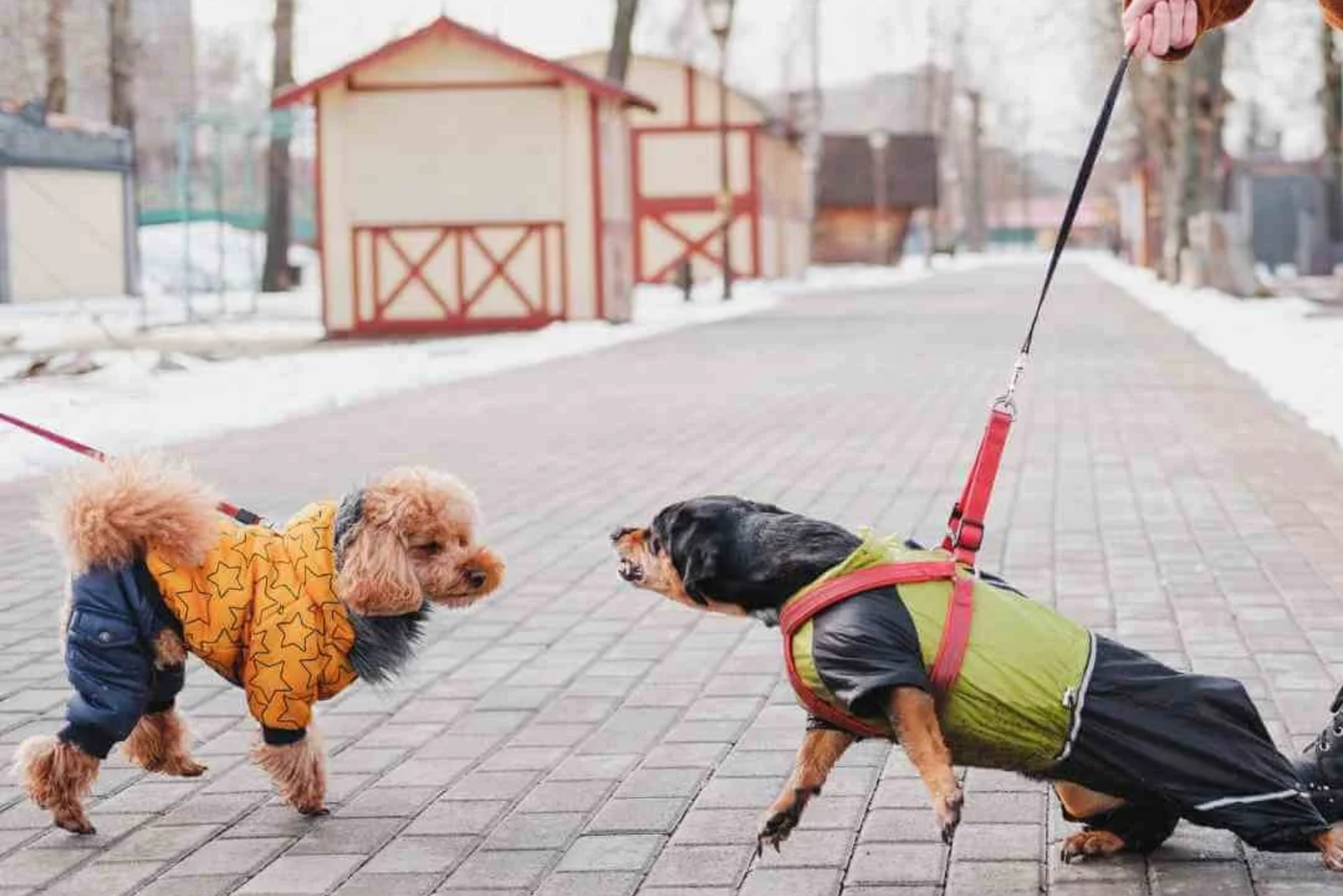
Walking your dog should be enjoyable, but it can become stressful when every passing dog triggers barking, pulling, whining, or lunging. If you are wondering how to stop a dog from barking at other dogs on leash, the first step is understanding that this behavior is not always caused by aggression.
Some dogs bark because they are frightened. Others become frustrated because they want to greet another dog but cannot reach them. Some become overexcited simply because the sight of another dog is highly stimulating. Canine behavior professionals commonly describe these responses as leash reactivity.
The good news is that leash reactivity can often be improved with thoughtful management and consistent training. The goal is not simply to suppress barking. Instead, you want to change your dog’s emotional response to other dogs and teach a calmer alternative behavior.
This guide explains how to stop a dog from barking at other dogs on leash with a practical reactivity protocol that you can gradually introduce during everyday walks.
Why Does a Dog Bark at Other Dogs on Leash?
Before deciding how to stop a dog from barking at other dogs on leash, identify what is driving the behavior. Barking is normal canine communication, and dogs may vocalize because they are excited, scared, frustrated, or trying to create distance.
A fearful dog may bark because another dog feels threatening. The barking and lunging may actually be an attempt to make the other dog move away. A frustrated dog may behave very differently. They may pull toward another dog because they desperately want to say hello.

There is also a major difference between reactivity and aggression. A reactive dog can appear dramatic on leash without actually intending to hurt another dog. Reactivity describes an excessive emotional response, while aggression involves behavior intended to intimidate, control, or cause harm.
Understanding that distinction matters because training should address the emotion behind the behavior rather than simply trying to silence the dog.
Fear-Based Reactivity
Fear is one of the most common reasons dogs react on leash. Your dog may stiffen, stare, bark, growl, or attempt to retreat before suddenly lunging forward.
This can seem confusing. Why would a frightened dog move toward something it fears?
From the dog’s perspective, moving forward can be an attempt to make the perceived threat disappear. If barking causes the other dog to walk away, your dog may learn that barking works.
Frustration and Excitement
Some dogs are perfectly comfortable around other dogs but become frantic when restrained by a leash. They may bark, whine, jump, or pull because they want access to the other dog.
This is sometimes called frustrated greeting. The leash prevents the dog from approaching, which can increase emotional arousal.
In these cases, how to stop a dog from barking at other dogs on leash is less about reducing fear and more about teaching impulse control and an appropriate alternative to pulling toward every dog.
What Is the Threshold in Leash Reactivity?
The most important concept in a reactivity protocol is your dog’s threshold.
Your dog’s threshold is the point at which they can still notice another dog without becoming overwhelmed. At this distance, your dog might look at the other dog, but they can still eat treats, respond to their name, or turn toward you.
Once the dog becomes fixated, barks continuously, lunges, ignores food, or cannot respond to familiar cues, they have probably crossed their threshold.
This is why distance is such an important part of learning how to stop a dog from barking at other dogs on leash. Professional training guidance recommends starting far enough away that the dog notices the trigger without reacting, then gradually decreasing the distance as the dog becomes more comfortable.
Your starting distance might be 10 feet, 30 feet, or even across an entire street. There is no universal number. It depends on the individual dog, environment, trigger, and intensity of the situation.
How to Stop a Dog from Barking at Other Dogs on Leash
The most effective approach combines management, desensitization, counterconditioning, and alternative behaviors.
Start With a Quiet Training Environment
Do not begin your training in the busiest dog park or on a narrow sidewalk where dogs constantly pass within a few feet.
Instead, choose a spacious location where you can control the distance between your dog and other dogs. A quiet park, open field, or wide walking area can provide more room to work.
Your first objective is not to make your dog walk directly past another dog without barking. Your objective is to create successful repetitions where your dog sees another dog and remains calm.
Teach Attention Before Adding the Trigger
Before practicing around other dogs, teach your dog to respond reliably to their name.
Say your dog’s name in a quiet environment. When they look toward you, immediately reward them. Repeat until turning toward you becomes automatic.
You can then build a simple “watch me” or hand-target behavior. These skills become valuable when another dog appears unexpectedly.
The key is to practice these behaviors when your dog is calm. Asking for a complicated behavior after your dog has already exploded at the end of the leash is unlikely to work.
Reward the Moment Your Dog Notices Another Dog
This is the heart of the reactivity protocol.
Imagine you are walking and your dog notices another dog 40 feet away. Your dog looks at the dog but remains quiet.
Immediately give a high-value reward.
Chicken, cheese, cooked meat, or another food your dog considers special can work well. The reward should be valuable enough to compete with the environment.
Over repeated sessions, your dog begins learning a new association: seeing another dog predicts something good.
This is known as counterconditioning. Desensitization involves exposing the dog to the trigger at an intensity they can handle, while counterconditioning changes the emotional association with that trigger. AKC guidance recommends pairing the trigger with valuable rewards while keeping the dog below threshold.
Use Distance Instead of Corrections
One of the biggest mistakes owners make when learning how to stop a dog from barking at other dogs on leash is waiting until the dog is already reacting.
By that point, the dog may be too emotionally aroused to learn.
Instead, move away before the reaction becomes intense.
If you see another dog approaching and your dog begins staring, calmly cross the street, step behind a parked car, move into a driveway, or turn around.
Distance is not failure. Distance is a training tool.
The more opportunities your dog has to practice barking and lunging, the more established that behavior can become. Managing the environment prevents unnecessary rehearsals while you teach a better response.
Teach an Emergency U-Turn
An emergency U-turn is one of the most useful skills for a reactive dog.
Practice it first without distractions. Give a cheerful cue such as “this way,” turn around, and encourage your dog to follow. Reward them generously when they come with you.
Once the behavior is reliable, you can use it when another dog suddenly appears too close.
The American Kennel Club recommends teaching an emergency turn so the dog can quickly move away from an approaching trigger.
The important detail is to teach the U-turn before you need it. A dog cannot easily learn a new emergency behavior while already overwhelmed.
Don’t Force Dog-to-Dog Greetings
Another important part of understanding how to stop a dog from barking at other dogs on leash is changing your expectations about greetings.
Your dog does not need to meet every dog they see.
In fact, repeatedly allowing a barking or pulling dog to reach another dog can accidentally reinforce the behavior. The dog may learn that pulling, whining, or barking eventually gets them what they want.
Instead, reward calm walking and neutral observation.
The goal is for your dog to see another dog and think, “There is another dog,” rather than immediately thinking, “I have to get over there.”
The AKC also recommends proactively creating space and teaching dogs skills for avoiding unwanted approaches.
What Should You Do If Your Dog Starts Barking?
If your dog has already started barking, avoid yelling “No!” repeatedly.
Yelling can increase arousal and may add more excitement to an already difficult situation. It also does not teach the dog what you actually want them to do instead.
Calmly create distance.
Use your practiced U-turn, move behind a visual barrier, or walk away until your dog can think again. Once your dog settles, reward calm behavior.
This is an important part of learning how to stop a dog from barking at other dogs on leash because successful training depends on keeping reactions manageable rather than repeatedly pushing the dog into overwhelming situations.
Choose the Right Walking Equipment
Equipment does not cure reactivity, but suitable equipment can make management safer and easier.
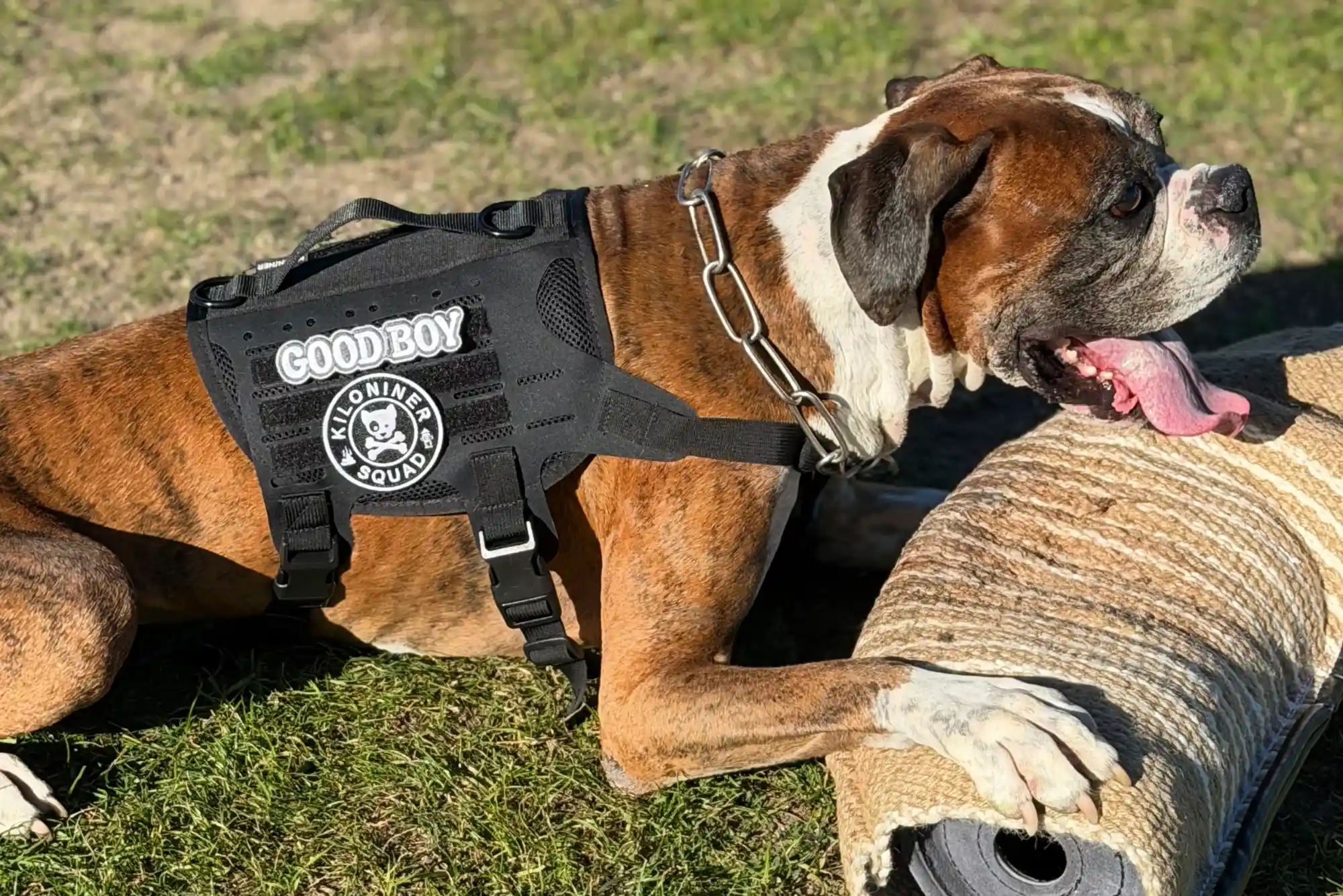
A properly fitted harness can provide useful control without placing pressure directly on the dog’s throat. AKC guidance notes that a front-clip harness can be an option for dogs that lunge, while head halters require careful acclimation and appropriate handling.
Avoid relying on equipment as a substitute for behavior modification.
Your long-term goal should be to help the dog develop better emotional regulation and walking skills rather than simply finding a stronger way to physically control them.
Why Punishment Can Make Reactivity Worse
Punishing barking may seem logical because you want the dog to stop.
However, if your dog is barking because they are afraid, adding pain or intimidation when another dog appears can make the emotional association worse. The dog may begin connecting the presence of other dogs with an unpleasant experience.
That can increase fear and arousal rather than creating genuine calm.
A reward-based approach gives your dog information about what to do instead. When the dog notices another dog and chooses to look back at you, that behavior becomes valuable.
This approach is particularly important when fear is involved. Training should change the underlying emotional response, not merely suppress the outward behavior.
A Practical Weekly Reactivity Protocol
Consistency matters more than marathon training sessions.
During the first stage, focus on teaching attention, hand targeting, loose-leash walking, and the emergency U-turn in low-distraction environments.
Next, introduce another dog at a large distance. Allow your dog to notice the dog and immediately reward calm observation. Keep sessions short and end while your dog is still successful.
As your dog improves, gradually decrease the distance. Do not rush this stage. If your dog starts barking, lunging, or refusing food, increase the distance again.
Eventually, you can introduce more realistic walking environments. Change locations, work around different dogs, and gradually introduce greater levels of distraction.
Progress is rarely perfectly linear. A dog may perform beautifully one day and struggle the next. Fatigue, stress, weather, unfamiliar locations, and the behavior of the approaching dog can all influence a session.
The goal is steady improvement, not perfection.
Common Mistakes to Avoid
One common mistake is moving too close too quickly. Owners often see a few successful sessions and assume the dog is ready to pass another dog at close range. If the dog reacts, they may conclude that training has failed.
Instead, consider it useful feedback. The distance was probably too small, the trigger was too intense, or the training progressed too quickly.
Another mistake is using low-value rewards. If your dog ignores ordinary kibble around other dogs, that does not necessarily mean they are stubborn. The environment may simply be more rewarding than the food.
A third mistake is practicing only when another dog suddenly appears. Structured training is much easier because you can control the distance and intensity.
When Should You Contact a Professional?
Some cases require professional support.
If your dog has attempted to bite, has seriously injured another animal, repeatedly redirects aggression toward you, or becomes impossible to control around dogs, seek help from a qualified behavior professional.
A veterinarian should also be consulted if the behavior appears suddenly or changes dramatically. Sudden behavioral changes can sometimes have an underlying medical component, and the RSPCA recommends veterinary attention when excessive barking represents a significant change or may be related to health concerns.
For severe reactivity, a qualified trainer experienced with leash reactivity or a veterinary behaviorist can help create a safer individualized plan.
Build Calm Responses One Walk at a Time
Learning how to stop a dog from barking at other dogs on leash is not about demanding instant silence. It is about understanding why the reaction happens and giving your dog a better way to respond.
Start with distance. Teach reliable attention and an emergency U-turn. Reward your dog when they calmly notice another dog. Gradually decrease distance only when your dog remains comfortable. Most importantly, prevent repeated explosive reactions whenever possible.
With patience and consistent practice, your dog can learn that seeing another dog does not automatically mean barking, pulling, or lunging. If the behavior is severe or creates a safety concern, work with a qualified behavior professional rather than trying to manage the problem alone.
FAQs
Why does my dog bark at other dogs while on a leash?
Dogs may bark at other dogs because of fear, excitement, frustration, under-socialization, or a desire to create distance. Some dogs are friendly but become frustrated because the leash prevents them from greeting another dog.
How do I stop my dog from barking and lunging at other dogs?
Start by identifying your dog’s threshold and maintaining enough distance that they can notice another dog without reacting. Reward calm behavior, gradually introduce closer distances, and teach alternative behaviors such as looking at you or performing an emergency U-turn.
Should I let my dog greet other dogs on walks?
Not necessarily. Dogs do not need to greet every dog they encounter. Teaching your dog to calmly pass other dogs can reduce frustration and make walks more predictable. Creating distance from approaching dogs is also a useful management strategy.
Does yelling at a barking dog make it stop?
Yelling is generally not a useful solution because it can increase arousal or become another form of attention. A better approach is to calmly create distance, wait for the dog to settle, and reinforce an appropriate alternative behavior.
Can a leash-reactive dog become normal around other dogs?
Many leash-reactive dogs can improve substantially with consistent management and behavior modification. The goal may not be to make every dog comfortable with close greetings, but to teach the dog to remain calmer and respond appropriately when another dog is nearby.
How long does it take to stop a dog from barking at other dogs on leash?
There is no fixed timeline. Some dogs show noticeable improvement within weeks, while others need months of structured training. Progress depends on the cause and severity of reactivity, training consistency, the dog’s environment, and how carefully their threshold is managed.